Corrosion control and energy efficiency are two primary cost factors to the U.S. economy. G2MT Laboratories recently reported that "Corrosion will cost the US economy over one trillion dollars in 2015". This same G2MT study provides the following costs related to corrosion.
The management-related cost of corrosion control include:
- Corrosion-related inspection
- Corrosion-related maintenance
- Repairs that are required due to corrosion
- Replacement of corroded parts that are found during inspections or operation
- Inventory and maintenance of backup components
- Rehabilitation and refurbishment
- Loss of Productive time for operation
The National Association of Corrosion Engineers (NACE) study states that 50% of all corrosion costs are preventable and 25-35% of corrosion costs could be saved if optimum corrosion control methods were used.
Corrosion coating is one primary method available to reduce corrosion costs in various industries, equipment and applications.
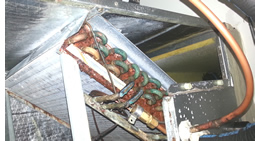 Corrosion in the HVAC industry alone costs billions of dollars each year. Corrosion and its deposited by-products can reduce equipment efficiency, increase operating costs and cause equipment failure. HVAC equipment is exposed to elements such as humidity in the air, pouring rain, saltwater in coastal areas, chemicals in industrial sites, etc. Corrosion in the HVAC industry alone costs billions of dollars each year. Corrosion and its deposited by-products can reduce equipment efficiency, increase operating costs and cause equipment failure. HVAC equipment is exposed to elements such as humidity in the air, pouring rain, saltwater in coastal areas, chemicals in industrial sites, etc.
According to CED Engineering, HVAC coils exposed to those conditions can fail in as little as one year. Coil failure caused by corrosion is responsible for 40% of HVAC equipment failures. Corrosion directly affects the efficiency of HVAC units, reduces their life span, increases operating costs and has a direct correlation on energy costs. Reduced HVAC efficiency equals increased energy costs.
|